Do you really know non woven fabric?
Aug 14, 2021
According to different production processes, non-woven fabrics can generally be divided into the following types:
1. Spunlace non-woven fabric: It sprays high-pressure fine water stream onto one or more layers of fiber webs to make the fibers entangled with each other so that the fiber webs can be reinforced and have a certain strength. The most common product is a facial mask.
2. Heat-bonding non-woven fabric: Adding fibrous or powdery hot-melt adhesive reinforcement material to the fiber web, and the fiber web is heated, melted, and cooled to reinforce into a cloth, which is most used in clothing adhesive interlining.
3. Spunbond non-woven fabric: After the polymer has been extruded and stretched to form continuous filaments, the filaments are laid into a net, and then the fiber net is self-bonded, thermally bonded, chemically bonded, or mechanically reinforced. The most common product is shopping bags.
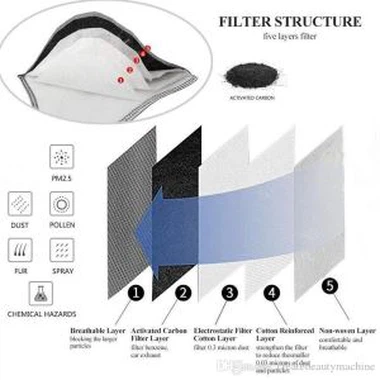
4. Melt-blown non-woven fabric: is a conventional fabrication method of micro- and nanofibers where a polymer melt is extruded through small nozzles surrounded by high-speed blowing gas. The application is always in air filtration.
5. Needle-punched non-woven fabric: It is a kind of dry-laid non-woven fabric. The needle-punched non-woven fabric uses the puncture effect of needles to reinforce the fluffy fiber web into a cloth. It is most commonly used in car interiors and air filter bags.
6. Impregnated non-woven fabrics include saturated impregnated non-woven fabrics and foam impregnated non-woven fabrics. The production process generally includes the following parts: opening, carding, netting, dipping, drying, and roll cutting. The impregnated non-woven fabric is to pass the netted cotton net through the dipping tank, then dry it into cloth. The main feature of impregnated non-woven fabric is dipping. According to customer requirements, different glues can be adjusted to produce products that meet customer needs. It is mostly used for clothing, shoe and hat lining, filter material, chef hat, etc.