Air purifier core parameters - filter element
Jul 01, 2021
Currently developed on pure fog haze empty net industry in China is not stable and maturity, the most direct performance is: after the national efforts on environmental governance, the fog around the country are improved effectively, especially in large cities such as Beijing, Shanghai annual average PM2.5 concentrations declined significantly, made by the haze of the market demand. On the other hand, although Chinese consumers are generally concerned about indoor chemical gas pollution after decoration, especially formaldehyde, the demand for removing indoor decoration pollution has not been widely released due to market demand base and filtration technology.
The air purifier is mainly based on the principle of multiple cycles to achieve the purpose of purifying indoor air. Therefore, the design requirements of air purifier filters are not the same as those used in the HVAC/industrial field. The balance between the size, filtration efficiency, resistance, and dust capacity of the filter determines the appearance, size, performance, noise, energy consumption, and other indicators of the whole machine.
Let's take a look at the core parameters of an air purifier ——The filter element
The filter element is the most important part of the air purifier.
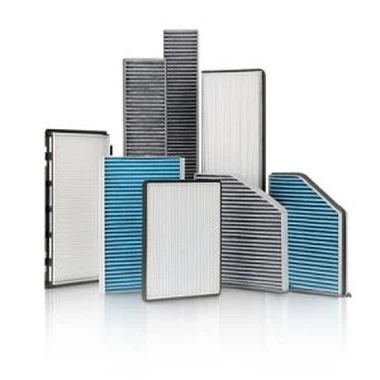
Whether the filter element is excellent or not is directly related to the purification ability of air cleaning. The filter element is mainly composed of three parts: pre-filter screen, activated carbon filter screen, and HEPA filter screen. Like another photocatalyst catalysis, negative ion generator, ultraviolet sterilization, and so on belong to the icing on the cake configuration, not and will not affect the core function.
1) pre-filter
The pre-filter screen is usually installed in the front of the filter element to filter large particles of pollutants such as hair and dust. If there is no pre-filter, the activated carbon filter is easy to be blocked by large particles of pollutants and reduces the lifespan.
2) activated carbon filter
Activated carbon is an internationally recognized highly absorbent material, which was used in gas masks as early as World War I.
Activated carbon is a porous carbon material, its rich space structure make it has a large surface area, so it's easy to contact with toxic or harmful gases in the air is full, the strong adsorption of activated carbon holes around the force field will immediately to the suction hole, toxic gas molecules so active carbon has strong adsorption ability, the main effect is to remove gaseous pollutants such as formaldehyde.
So to remove formaldehyde pay attention to, an activated carbon filter is the key to remove formaldehyde! Activated carbon quantity, the more the better, the more layers the higher the efficiency.
3) HEPA filter
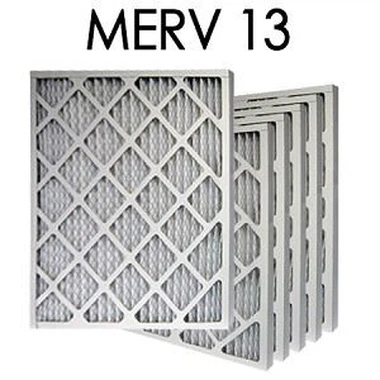
Standard HEPA filters can absorb 99.7 percent of particulate matter (0.1 to 0.3 microns in diameter is the most difficult pollutant to filter) and can absorb chemical fumes, bacteria, dust particles, and pollen, but they also have relatively high resistance.
There are several levels of H11, H12, and H13 commonly used in HEPA filters of air purifiers on the market. The filtering efficiency of H13 can reach 99.97%.
With the continuous improvement of living standards, modern people pay more and more attention to health. With air pollution becoming more and more serious today, air purifiers are bound to become more and more popular.
The focus of the air purifier on the market will be different. I hope everyone can choose the right air purifier to make the life of the family more fresh and comfortable.