Air purifiers -- capture allergens
Jul 08, 2021
The need to remove indoor allergens has not received much attention from the air cleaning industry in the past few years. At the same time, the domestic public's awareness of allergy and the base of allergic people are rapidly increasing, which is behind the improvement of sanitation conditions and the increase of allergic diseases.
Every year, spring, summer, and autumn are the seasons with a high incidence of allergies, especially in April and May and August and September. In terms of the types of allergies, skin allergy ranks first in the list of allergic diseases in first-tier cities, followed by eczema, allergic rhinitis, and asthma. Looking forward to the future domestic air purifier market, with the gradual release of the demand for removing allergens in indoor air, to find a better product positioning and market development direction.
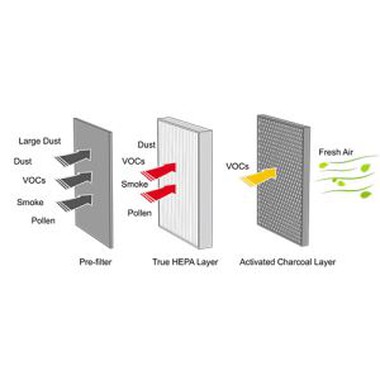
The air purifier is mainly based on the principle of multiple cycles to achieve the purpose of purifying indoor air. Therefore, the design requirements of air purifier filters are not the same as those used in the HVAC/industrial field. The balance between the size, filtration efficiency, resistance, and dust capacity of the filter determines the appearance, size, performance, noise, energy consumption, and other indicators of the whole machine.
Electrostatic air filters can capture many of the allergens that aggravate allergy and asthma symptoms. Pollen, molds, and dust are common in any household and can be reduced by using electrostatic air filtration. Electrostatic air filtration can remove symptom-causing dust, pollen, mold, and dander, as air circulates through your central air system. Above all the electrostatic technology uses a patented configuration of woven filtration media plus a medical quality, anti-microbial, foam core which inhibits mold and bacteria growth.
Dust-Free electrostatic air filters utilize synthetic material which develops an electrostatic charge as friction is applied to the plastic fibers. In the filter's case, air flowing through the filter provides the necessary friction. This can be demonstrated by rubbing the surface of the filter with a cloth briskly and placing the filter over lightweight flakes of material such as tea leaves, or styrofoam chips.
The small chips will be attracted to the filter surface and held there due to the charge that developed on the filter as a result of rubbing it. Also, the electrostatic charge that is developed as air passes through the filter, increases the filter's attraction to particles such as pollen, molds, and dust. An electrostatic filter is generally effective in capturing particles 1 micron and larger. A micron is 1/25,000 of an inch. As a result, some of the particles Dust Free filters can capture include house dust, lint, animal dander, pollen, mold spores, and skin flakes. Particles and their size in microns.